 |


The EIBA is pleased to acknowledge the following Official Partners & Suppliers



-(003).png)









|
ELIZABETH SHIPLEY'S ROAD TO THE COMMONWEALTH GAMES |
|
After a volunteering role at the
Birmingham Games four years ago, it's a dream come true for the
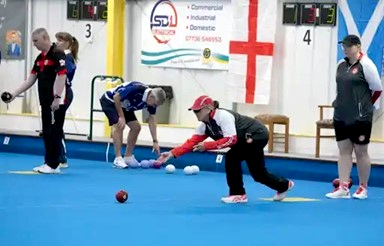
26-year-old from Hinckley. "Bowls has always been part of family life," she recalled. "My dad and grandpa both played, so I grew up around bowls and the club environment. "I'll admit I'm not the best bowler in the world, but by directing I can still enjoy bowls in a different way. I've learned so much about bowls through directing, things like the quirky laws of the game, reading greens and understanding how different greens play." For Elizabeth, these nuances have become an important part of the challenge and enjoyment she derives from bowls. "It's a sport that's not traditionally 'sporty' in the usual sense," she says. "But there's so much knowledge and skill involved that people don't always see at first." After preparing rinks to moving ramps and pushing wheelchairs at Birmingham, call from Bowls England Performance Director Mo Monkton launched Elizabeth's association with through Disability Bowls England. It was during this time that she first encountered Sally-Ann. "Without a director, many VI bowlers can't bowl," she says. "So it's an honour and a privilege that Sally keeps me as her director - and puts up with my quirks." Directing is far more complex than simply pointing the way to the jack. Each partnership is unique, and the best directors must adapt their approach to suit the individual player they are working with. "Every director is different because every player is different," Shipley explains. "Different players want and need different things." Some players benefit from detailed front-end guidance, while others prefer only minimal information about where their bowl has finished. Even small practical preferences vary from player to player. "Some like their bowls handed to them, others don't," she says. "The list goes on." Because of this, Elizabeth believes adaptability is one of the most important qualities of a director. "You need to be able to adjust to the player you're working with," she says. "What works for one person might not work for another." ommunication is another essential ingredient. Clear, calm and consistent information helps build trust between player and director, a crucial factor in high-pressure matches. Decision-making also plays a key role, particularly when reading changing conditions or choosing the right line. "Understanding the game is really important," she adds. "And having the willingness to keep learning." 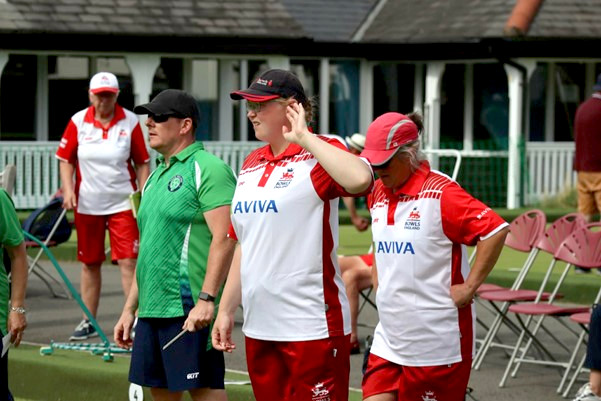 Preparation is a crucial part of Elizabeth's approach. Drawing inspiration from the Girlguiding motto "Be prepared", she travels to competitions with what she calls her "directing kit". Inside it are all the tools she might need during a match: specialist shoes, string and Velcro markers used on a strung rink, measuring equipment, wedges and other essentials. "I always carry it with me," she says. "Because you never know what you might need." The kit also serves another purpose - helping educate spectators and players unfamiliar with visually impaired bowls. "There's often someone who hasn't seen a strung rink before," Elizabeth says. "So I also carry some information about VI bowls and directing." While the partnership with Sally-Ann is now taking Shipley to the sport's biggest stages, she has already experienced a number of memorable moments along the way. Selection for the Commonwealth Games and medals at last year's inaugural World Cup in Malaysia are also among her proudest achievements. Another is them reaching the last eight of the women's singles at an international event, an achievement that stands out for a unique reason. "As a bowler, I would never have that experience," she says. "So to do it as a director was something really special." Some might say the partnership between the two women was meant to be: as part of a primary school project about bowls, Elizabeth was asked to show her work to a teaching assistant, Mrs Lewis. At the time it seemed like a simple classroom task, but the coincidence would only become clear much later. "It turned out Mrs Lewis was Sally-Ann's mum," she says with a smile, referring to the woman she would be directing at the highest level. Sian Honnor. We' d love to know what bowls means to you, get in touch at info@eiba.co.uk Previous Article - Interview with Lily Adams |
April 2026
 |
Archives |
Accessibility |
Downloads |
Guidance Notes |
Links |
Photos |
Contact Us |
Privacy Notice
 |